


Oil prices climbed sharply in Asian trading on Monday after US President Donald Trump warned Iran that “the clock is ticking” as efforts to end the war remain deadlocked.
Brent crude, the international benchmark, rose 1.7% to $111.13 (£83.44) a barrel, while US crude increased 2.1% to $107.62.
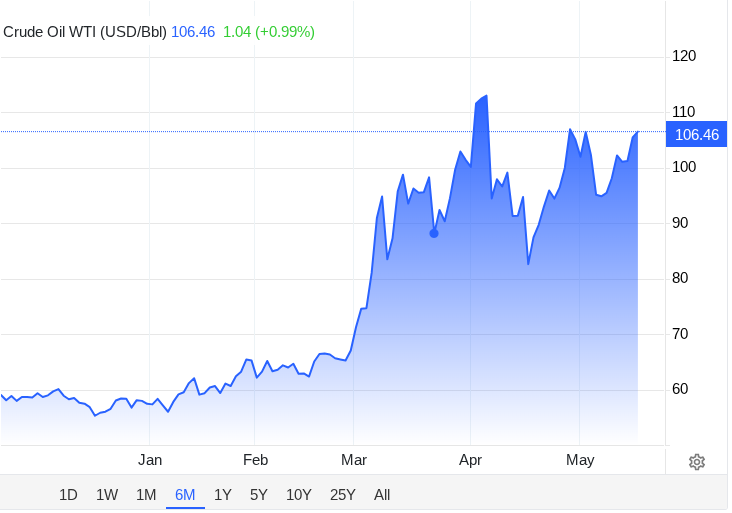
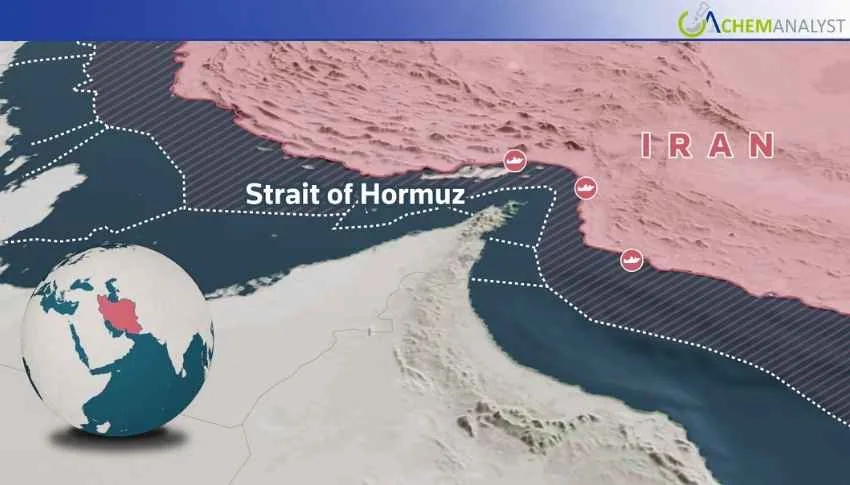
Energy markets have experienced major volatility since Iran effectively shut the Strait of Hormuz in response to US and Israeli strikes launched against the country on 28 February.
The strategic waterway normally carries about 20% of the world’s oil and liquefied natural gas (LNG) supplies.
Posting on social media, Trump said: “They better get moving, FAST, or there won’t be anything left of them. TIME IS OF THE ESSENCE!”
At the same time, Iranian media claimed the US had not offered any meaningful concessions in reply to Tehran’s latest proposals aimed at ending the conflict.
According to the semi-official Mehr news agency, the absence of compromise from Washington could result in an “impasse in the negotiations”.
Trump’s latest comments follow earlier warnings that a “whole civilisation” could perish if Tehran failed to agree to a peace settlement, remarks made shortly before a ceasefire was declared in early April.
Last week, the US president also said the truce was on “massive life support” after dismissing Iran’s demands as “totally unacceptable”.
News outlet Axios reported that Trump is expected to meet with senior national security advisers on Tuesday to discuss possible military action involving Iran.
Claudio Galimberti, chief economist at Rystad Energy, told the BBC: “This is a very dire situation and it’s going to get worse unless the strait is opened.
“We are approaching a summer of pain, I am afraid, unless Hormuz is opened.”
Although the latest oil price surge began during Asian trading hours, the impact is expected to be felt globally, including in the UK, because oil is traded on an international market.
Higher crude prices could push up petrol and diesel costs across Britain, while airlines and transport firms may also face rising fuel bills. Analysts warn that if oil prices remain above $110 a barrel for a prolonged period, UK households could eventually see increased costs for travel, goods and energy.
The rise in oil prices has already increased fuel costs for businesses, particularly airlines entering the busy summer travel season.
Ryanair, which released its annual results on Monday, said: “The conflict in the Middle East has created economic uncertainty and we still don’t know when the Strait of Hormuz will reopen.”
The airline added that it had locked in prices for 80% of its future jet fuel needs through fixed-price contracts.
However, it warned that the cost of the remaining 20% “has spiked due to the Middle East conflict”.
Ryanair reported annual profits of €2.26bn (£2bn), up from €1.6bn the previous year, while revenue increased 11% to €15.5bn for the financial year ending in March.
Despite the strong results, the airline said forecasting future performance remains difficult because of both the Iran conflict and the continuing war in Ukraine.
Since the outbreak of hostilities in the Middle East, Iran has carried out attacks against neighbouring countries, including Israel, Bahrain and the United Arab Emirates.
On Sunday, the UAE said a drone strike sparked a fire near its nuclear power facility, describing the incident as a “dangerous escalation”.
Authorities are still investigating who launched the strike. The UAE defence ministry stated that three drones entered the country from the “western border direction”.
Officials said two drones were intercepted, while the third hit an electrical generator “outside the inner perimeter” of the Barakah Nuclear Power Plant in Abu Dhabi, causing a fire.
No injuries were reported, and authorities confirmed there was no impact on radiation safety levels.