


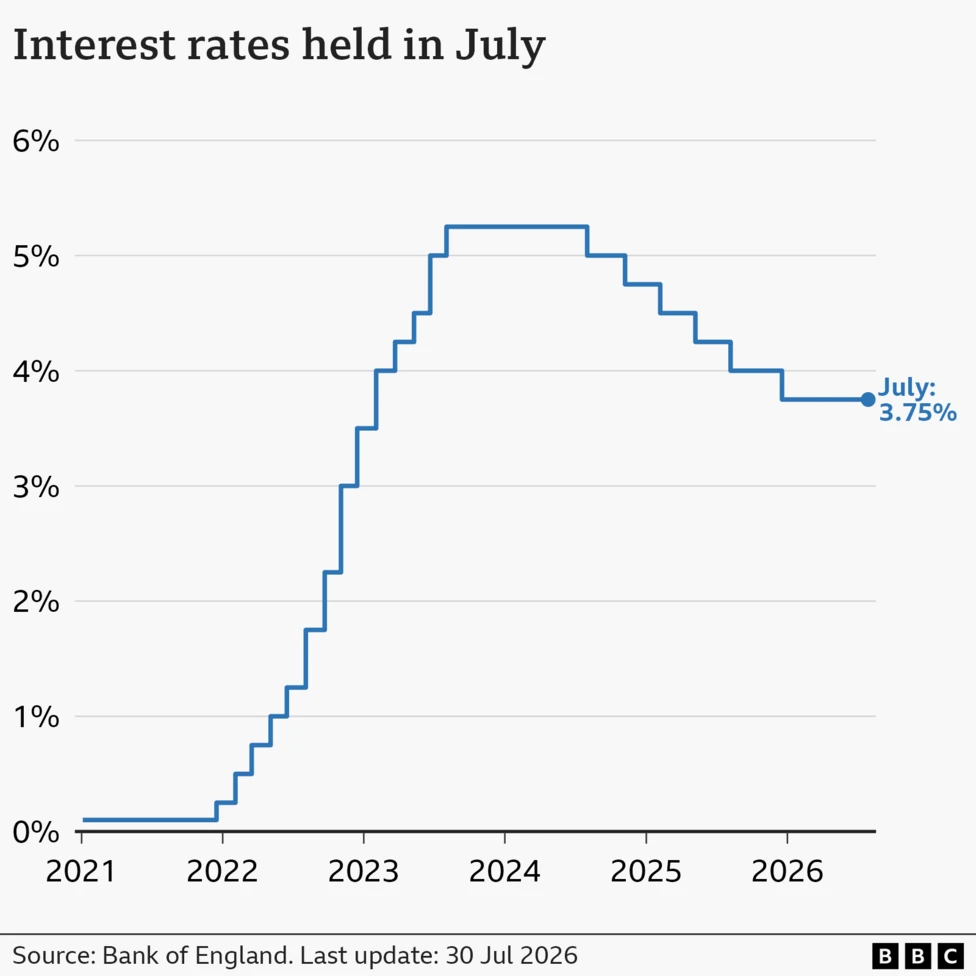
The Bank of England has decided to keep the UK’s base interest rate at 3.75%, marking the fifth meeting in a row where rates have remained unchanged.
The decision had been widely expected, with policymakers continuing to monitor the economic impact of the ongoing conflict in the Middle East and rising global energy prices.
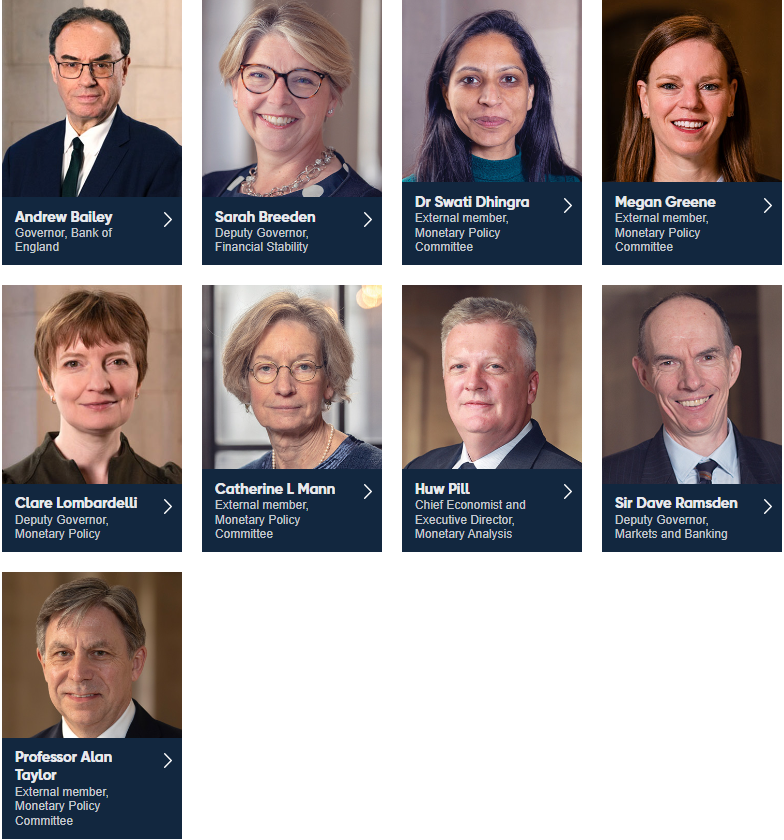
Six members of the Bank’s nine-person Monetary Policy Committee voted to leave interest rates unchanged, while three supported increasing them to 4%. The result shows growing concern about inflation, as more members backed a rate rise compared with the previous meeting.
The Bank warned that inflation is expected to increase during the rest of the year, mainly because higher energy prices are pushing up costs for households and businesses. It said companies are likely to pass these extra costs on to customers, which could lead to higher prices across the economy.
Speaking after the announcement, Bank of England Governor Andrew Bailey said there is currently little evidence that higher energy costs are feeding into wider inflation across the economy. However, he warned it is too early to be confident.
The Bank now expects inflation to rise to just above 3% by the end of the year, with higher petrol, diesel and household energy prices expected in the coming months.
Bailey also said that if the conflict in the Middle East continues and higher energy costs begin driving up wages and prices more widely, the Bank may need to increase interest rates in the future to keep inflation under control.
What it means for homeowners
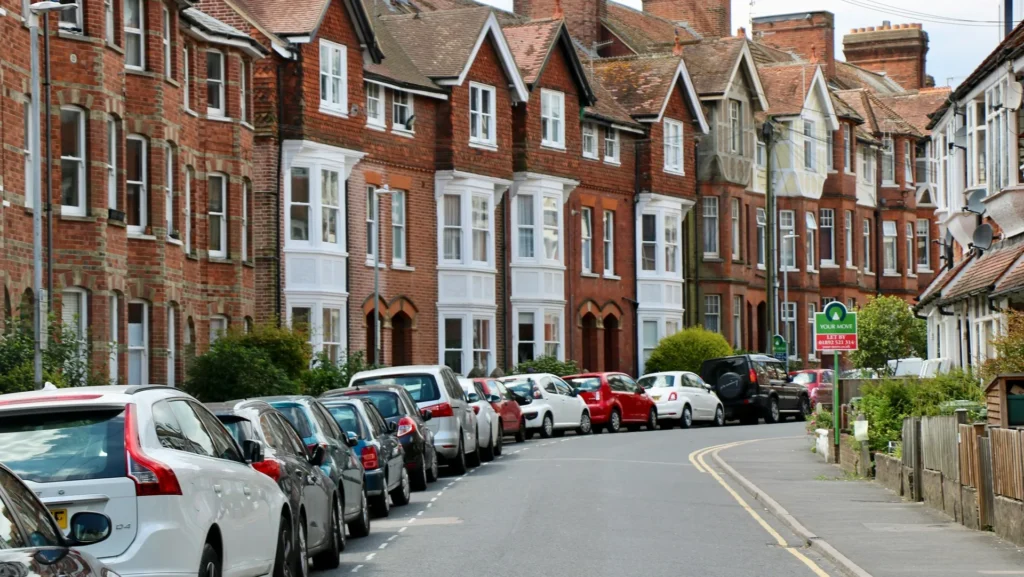
People with tracker mortgages will not see any change to their monthly repayments, as these loans move directly with the Bank of England’s base rate.
Those on standard variable rate (SVR) mortgages are also unlikely to notice an immediate difference, although lenders can change these rates whenever they choose.
For homeowners looking for a fixed-rate mortgage, borrowing costs have already risen in recent weeks. This is because fixed mortgage rates are influenced by financial markets rather than the Bank’s base rate.
The average rate for a new mortgage has increased from 5.43% to 5.59% over the past two weeks. On a £200,000 mortgage over 25 years, that could add around £230 a year to repayments.
News for savers
The decision is likely to be positive for many savers, with experts expecting savings rates to remain competitive.
Current one-year fixed savings accounts are paying around 4.91%, while five-year fixed deals are offering close to 4.97%.
Some analysts believe the Bank could still raise interest rates later this year if inflation continues to increase, meaning savings rates could improve further. However, experts also say there is no guarantee rates will keep rising, so people may want to consider locking in a good deal while they are available.